Local Need
Why Newark needs this Foundation
Newark & Sherwood faces some of the most significant deprivation challenges in the East Midlands. Understanding the context is essential to understanding our work.
The case for action
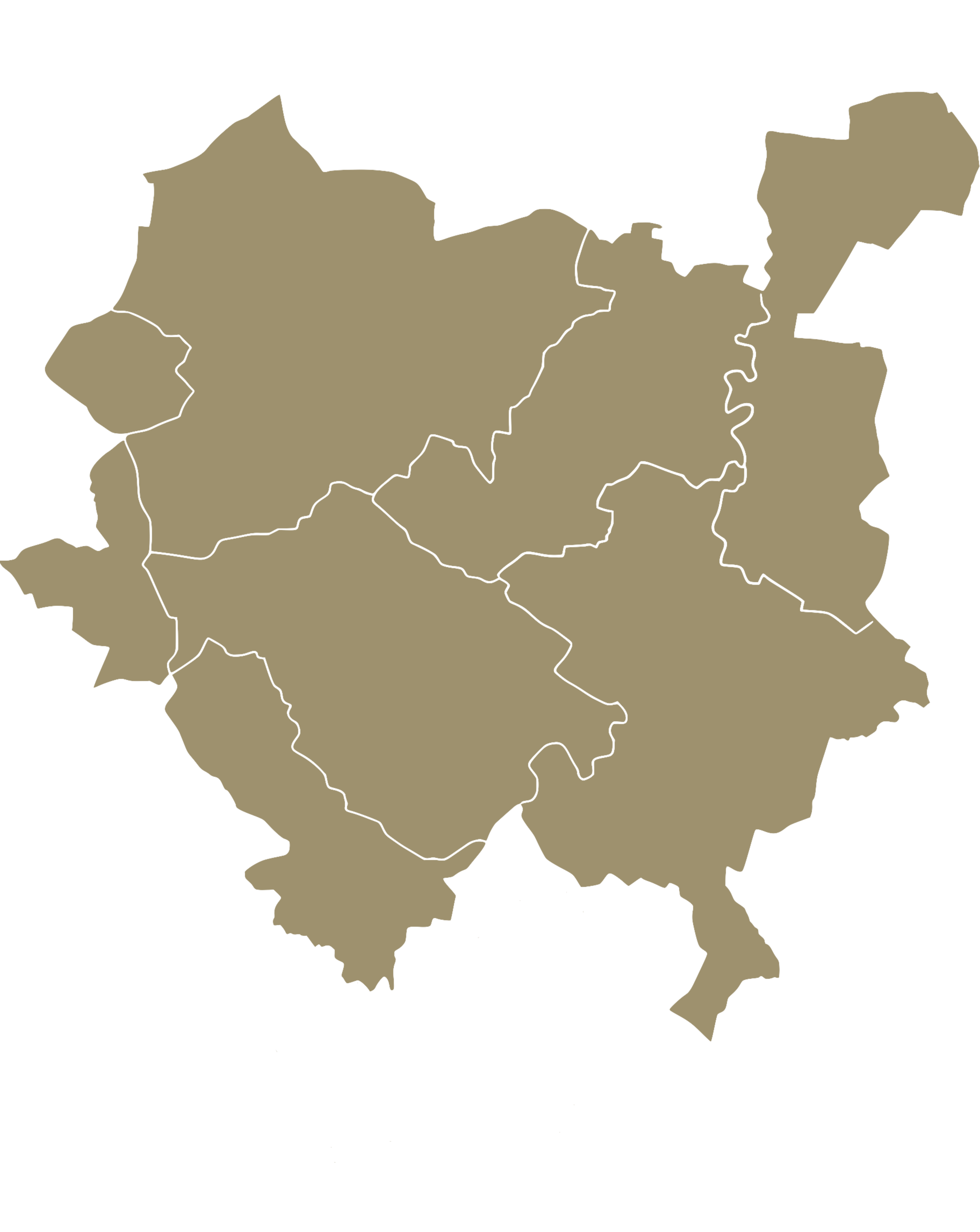
Newark & Sherwood combines areas of prosperity with neighbourhoods experiencing significant deprivation, health inequality and reduced opportunity. Several Lower Super Output Areas rank amongst the most deprived nationally — for health, education, income and child poverty. Priority communities include Newark Town Centre, Bridge, Devon, Magnus and parts of Balderton. Behind every statistic is a young person whose life chances are shaped by where they grow up. The Foundation exists to change those odds.
Deprivation and inequality
Newark & Sherwood contains some of the most deprived communities in England. Multiple Lower Super Output Areas rank in the bottom 20% nationally on the Index of Multiple Deprivation — with pockets of the town centre and surrounding areas among the most disadvantaged in the East Midlands.
33.5%
of children in Newark & Sherwood live in low-income households
vs 27.0% nationally (ONS)
Bottom 20%
nationally for Health Deprivation & Disability across significant Newark neighbourhoods
MHCLG Indices of Multiple Deprivation
30%+
of Newark LSOAs are among the most deprived nationally for Education, Skills & Training
MHCLG Indices of Multiple Deprivation
Health and physical activity
Children in Newark & Sherwood are less physically active than both regional and national comparators. Healthy life expectancy remains below national averages, and several Newark neighbourhoods rank within the most deprived 20% nationally for Health Deprivation & Disability. Mental health concerns, loneliness and social isolation continue to increase.
44.7%
of children are physically active in Newark & Sherwood
vs 47.2% nationally (Sport England Active Lives)
60.0 yrs
healthy life expectancy for males — below the national average of 61.5 years
ONS / Nottinghamshire ICS
60.1 yrs
healthy life expectancy for females — below the national average of 63.9 years
ONS / Nottinghamshire ICS
Education and attainment
Qualification levels in Newark & Sherwood remain significantly below county, regional and national averages. Schools report increasing concerns around attendance, behaviour and social, emotional and mental health needs. Demand for mentoring and early intervention support continues to grow.
45.7%
of residents hold Level 3 qualifications
vs 56.6% nationally (NOMIS Labour Market Profile)
16.3%
of residents hold no qualifications at all
vs 13.1% nationally (NOMIS Labour Market Profile)
30%+
of Newark LSOAs among the most deprived nationally for Education, Skills & Training
MHCLG Indices of Multiple Deprivation
Employment and economic opportunity
Although employment rates are relatively strong, qualification levels remain low and many young people lack access to leadership, volunteering and employability opportunities. Economic inactivity linked to ill-health and caring responsibilities remains above desirable levels, and skills shortages continue to affect local economic growth.
77.5%
employment rate (16–64) — above regional and national averages
NOMIS Labour Market Profile
21.0%
economic inactivity rate — linked to ill-health and caring responsibilities
NOMIS Labour Market Profile
Low
qualification levels limit social mobility and workforce readiness for young people
Newark & Sherwood Community Plan
Community safety
Nearly two-thirds of Newark & Sherwood residents do not feel safe after dark — well above regional and national comparators. Crime rates in Newark Town Centre exceed national averages across multiple categories, and youth disengagement and anti-social behaviour remain strategic priorities for the district.
64%
of residents feel unsafe after dark
vs 47% nationally (Newark & Sherwood Community Plan)
30.8
shoplifting offences per 1,000 population in Newark
vs 7.9 nationally
16.5
criminal damage & arson offences per 1,000 population
vs 7.1 nationally
Community cohesion and belonging
Newark & Sherwood has a net social trust score of -11% — significantly below the national figure of -3%. Local consultation and strategic planning consistently identify social isolation, reduced participation, lack of belonging and community fragmentation as key concerns. Communities identify a clear need for more youth activity, family engagement, volunteering pathways and positive social spaces.
- Net social trust of -11% — significantly below the national figure of -3%
- Social isolation risk is increasing, particularly for young people and older residents
- Communities consistently identify demand for youth activity, volunteering and positive social spaces
The scale of the challenge
The evidence demonstrates a clear need for early intervention, mentoring, positive activity, leadership development and community engagement across Newark & Sherwood. These challenges are interconnected — poor health reduces participation, educational disengagement reduces opportunity, poverty increases vulnerability, and social isolation affects wellbeing.
| Challenge | Newark & Sherwood | England |
|---|---|---|
| Physically active children | 44.7% | 47.2% |
| Level 3 qualifications | 45.7% | 56.6% |
| Residents with no qualifications | 16.3% | 13.1% |
| Children in low-income households | 33.5% | 27.0% |
| Residents feeling unsafe after dark | 64% | 47% |
Government recognition of local need
In 2025, the UK Government selected Newark-on-Trent as one of just 75 towns nationally to receive dedicated regeneration investment through the Pride in Place Programme — a direct acknowledgement that Newark faces significant and sustained challenges. The fund's stated aims map directly onto NRCF's work.
£19.5m
awarded to Newark over 10 years (2026–2036)
Programme objectives
Our response to local need
Every NRCF programme is designed with this context in mind. We do not deliver sport for sport's sake — we use rugby as a vehicle to address the specific challenges facing young people in Newark & Sherwood: low confidence, poor attendance, limited qualifications, and restricted access to opportunity.
Data sources
The statistics on this page are drawn from published national and local data sources. Where figures differ from earlier estimates, the most recently published benchmarked data has been used.
- Sport England Active Lives Children & Young People Survey
- NOMIS Labour Market Profile
- Office for National Statistics (ONS)
- MHCLG Indices of Multiple Deprivation
- Newark Pride in Place Regeneration Plan
- Newark & Sherwood Community Plan
- Nottingham & Nottinghamshire Integrated Care System Health Inequalities Plan
Help us respond to local need
The challenges are real — but so is the opportunity. Every donation, partnership and volunteer hour helps us reach more young people who need us most.